Remember the days when ranking on the first page of Google was the holy grail for freelancers? You'd spend months obsessing over keywords, backlink strategies, and meta descriptions just to hope a potential client might stumble upon your portfolio.
Well, it's 2026, and the game has changed. If you're still waiting for Google to send you leads, you might be waiting a long time.
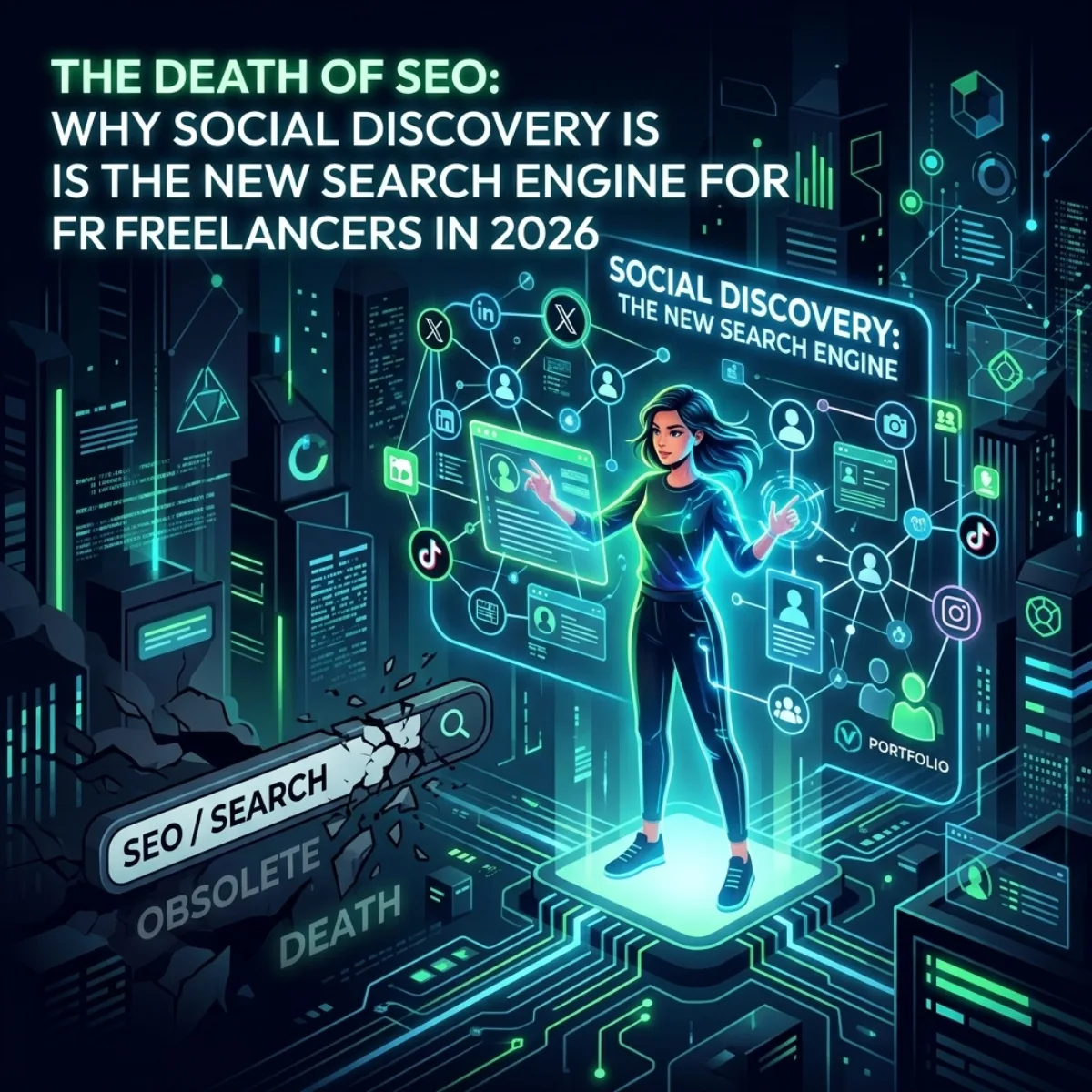
The truth is, traditional SEO isn't exactly "dead," but for independent professionals, it's no longer the primary way people find you. We've entered the era of Social Discovery. Clients aren't searching "Best Logo Designer in London" anymore. They're browsing their LinkedIn feeds, checking X (formerly Twitter) for industry authorities, and scrolling through Instagram to find a "vibe" that matches their brand.
At Kiwi, we see it every day. The most successful freelancers are the ones who have stopped chasing algorithms and started building digital presence where the conversations are actually happening.
The Search Engine is Now a Social Feed
Let's be real: Google has become a bit crowded. Between the AI-generated snippets and the sea of ads, finding a real, talented human being can feel like finding a needle in a haystack.
In 2026, search has become fragmented. When a business owner needs a developer or a marketing strategist, they look for proof of life. They want to see what you're thinking about today, not what you wrote in a blog post three years ago to satisfy a keyword density requirement.
Why Clients are Moving to Social Discovery
- Trust over Traffic: A high Google ranking means you know SEO. A high-engagement LinkedIn post means people actually value your opinion.
- The "Vibe Check": Clients want to know if they'll like working with you. Social media gives them a peek into your personality, your process, and your professional values.
- Speed of Relevance: Social platforms show what you're doing now. A website can be static for months, but a social feed is alive.
LinkedIn: The New White Pages
For the modern freelancer, LinkedIn is no longer just a digital resume; it's your primary search engine. When a client hears your name, they don't Google you first, they search for you on LinkedIn.
They are looking for:
- Who do we have in common?
- What kind of content are you sharing?
- Do your comments show that you're an expert or just a spectator?
If your profile isn't optimized for discovery, you're missing out on the biggest referral network in the world. This is where tools like our AI Sales Accelerator come in handy, helping you stay on top of leads without spending ten hours a day networking.
X and Instagram: Authority and Aesthetics
While LinkedIn handles the professional vetting, X and Instagram handle authority and aesthetics.
On X, freelancers are building "Build in Public" legacies. They share their wins, their losses, and their specific expertise in real-time. This creates a searchable archive of your professional journey. If a client sees you solving a problem on their feed, they don't need to search for a solution, they just DM you.
On the visual side, Instagram has become the ultimate portfolio. For photographers, designers, and even copywriters, the "grid" is the first impression. It's about Vibe Marketing. It's not just about the work; it's about the lifestyle and the brand you represent.
Oops! Are You Still Ignoring Your Personal Brand?
If you're still thinking, "I don't have time for social media," you might be accidentally hiding from your best clients. We get it, posting every day is exhausting. You're a freelancer, not a full-time content creator.
But here's the secret: you don't have to be everywhere. You just have to be discoverable where your clients live.
Instead of writing 2,000-word SEO articles that nobody reads, try:
- Sharing one "lesson learned" from a project this week.
- Posting a short video of your workspace or a tool you use.
- Engaging with three potential clients' posts every morning.
These small actions create a "discovery trail" that leads right to your door.
The Shift from Keywords to Entities
In the old world, you optimized for "keywords." In 2026, you optimize for "entities." This is a fancy way of saying that search engines (and social platforms) now understand who you are as a person.
When you consistently post about "AI-driven design" or "Remote Team Management," you become an entity associated with those topics. When someone asks an AI or a social search bar for a recommendation, your name pops up because you've built that association through social discovery, not by stuffing keywords into a footer.
To help with this, many freelancers are using our Brand Identity & Visual Guidelines module to ensure that no matter where they're discovered, they look consistent and professional.
How to Win at Social Discovery in 2026
If you want to stay ahead of the curve, you need to treat your social presence as your new homepage. Here is a simple framework to get started:
1. Optimize for the "Search Bar"
Every social platform has a search bar. Use it to your advantage. Put your primary skill in your headline. Instead of "Freelancer," try "UX Designer for Fintech Startups." Use the words your clients use.
2. Focus on Engagement, Not Just Reach
In the world of social discovery, ten comments from high-value prospects are worth more than 10,000 likes from random accounts. Direct interaction is what leads to contracts.
3. Use AI to Scale, Not to Fake
Don't use AI to write boring, generic posts. Use it to help you organize your thoughts and manage your workflow. Our agents can help you handle the administrative side of freelancing so you have more time to actually be social.
4. Build a Hub
While social is the discovery engine, you still need a place to close the deal. Whether it's a simple landing page or your profile in the Kiwi Directory, make sure there is a clear path from "Hey, I like this person's post" to "I want to hire them."
The Client Vetting Process has Changed
Think about the last time you hired someone. Did you go to page 5 of Google? Probably not. You likely asked a friend, looked at a few profiles on LinkedIn, or saw someone's work on your feed.
Clients are doing the same thing. They are vetting your:
- Consistency: Do you show up regularly?
- Authority: Do you know what you're talking about?
- Network: Who else trusts you?
If you can answer those three things through your social presence, you don't need SEO. You have something much better: social proof.
How Kiwi Empowers This New Way of Working
At Kiwi, we're built for this shift. We know that as a freelancer in 2026, your time is your most valuable asset. You shouldn't spend it fighting for Google rankings.
Our platform is designed to help you manage the leads you get from social discovery. From our CRM to our Quotes & Invoices module, we handle the "business" part so you can focus on the "discovery" part.
If you're looking to find more clients in your specific area, our Geographic Lead Discovery tool can help you bridge the gap between digital social presence and real-world opportunities.
Conclusion: Adapt or Be Invisible
The "Death of SEO" isn't a funeral; it's an evolution. It's a move away from trying to trick a computer and toward trying to connect with a human.
For freelancers, this is actually great news. It means you don't need a massive budget or a team of SEO experts to get noticed. You just need to be yourself, share your expertise, and show up where your clients are already looking.
The internet is becoming more human again. Isn't it time your marketing did the same?
Ready to level up your freelance business for the age of social discovery? Check out our features and see how Kiwi can help you grow. Or, if you're ready to dive in, join our marketplace and get discovered by clients who are looking for exactly what you offer.